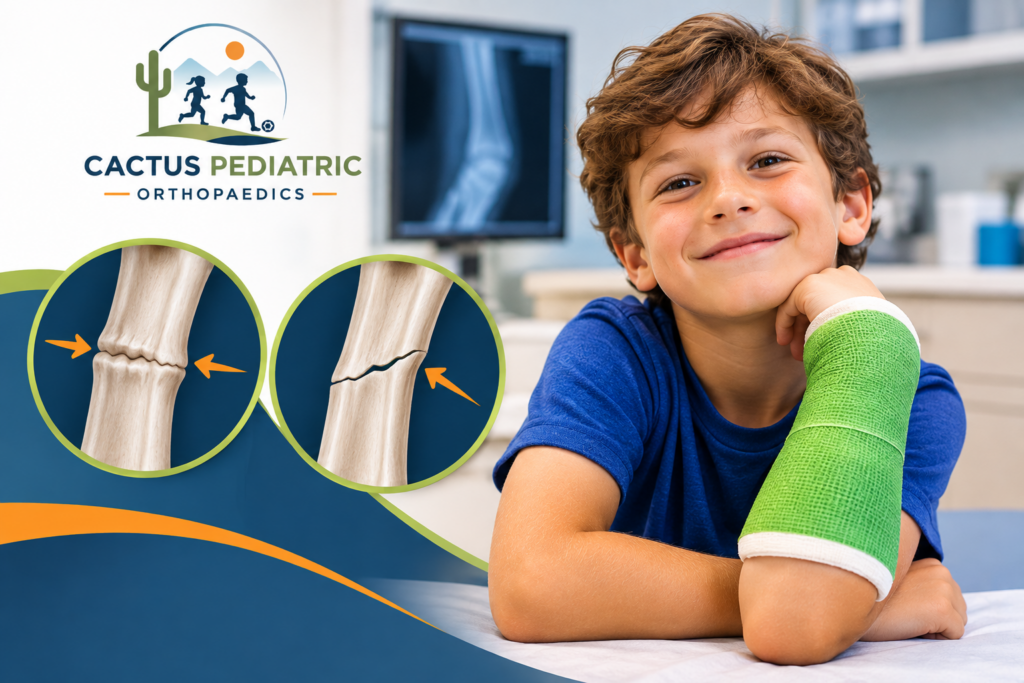

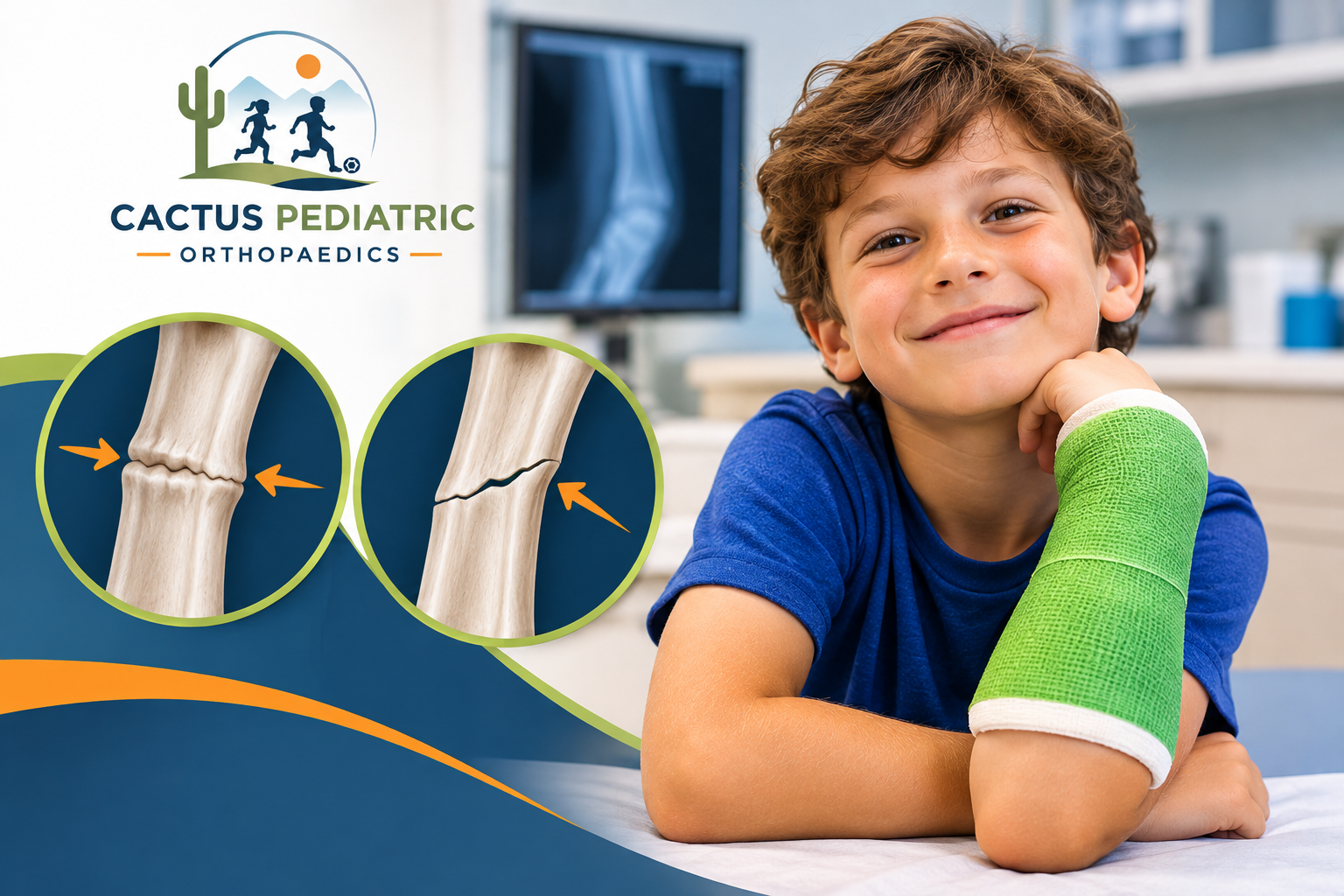
Buckle and greenstick fractures are incomplete breaks that happen because children’s bones are softer and more flexible than adult bones. A buckle fracture compresses one side of the bone and often heals in about three to four weeks with a removable splint or short cast. A greenstick fracture bends and cracks the bone and may need straightening and a cast.
When a child falls on an outstretched hand, the bone does not always snap in two. Because children’s bones are still growing, they can bend, crack, or compress instead. These incomplete fractures are among the most common injuries pediatric orthopedic specialists treat.
What Is a Buckle Fracture?
A buckle fracture, also called a torus fracture, happens when one side of the bone compresses and bulges outward, like a wrinkle in a soda can. It most often affects the distal radius, the forearm bone just above the wrist. Buckle fractures are stable, meaning the bone pieces stay aligned.
Why Children Get These Fractures
A child’s bones contain more collagen and are surrounded by a thick outer layer called the periosteum. This makes them more flexible than adult bones, so they are more likely to bend or compress than to snap completely. Falls from playground equipment, bikes, scooters, and trampolines are common causes, as is falling onto an outstretched hand during sports.
What Is a Greenstick Fracture?
A greenstick fracture happens when the bone bends and cracks on one side but doesn’t break all the way through, like bending a young green branch. These fractures are often in the forearm and can leave the bone visibly angled.
Buckle Fracture vs. Greenstick Fracture
- Buckle fractures compress the bone. Greenstick fractures bend and crack it.
- Buckle fractures are stable. Greenstick fractures may be angled.
- Buckle fractures usually do not need straightening. Greenstick fractures sometimes need a reduction to realign the bone.
- Buckle fractures often heal faster.
Common Symptoms
- Pain and tenderness near the wrist or forearm
- Swelling
- Reluctance to use the arm
- A visible bend, more common with greenstick fractures
Some children with buckle fractures still move the wrist fairly well, so a fracture can be mistaken for a sprain. An X-ray confirms the diagnosis.
How They Are Treated
Buckle fractures are commonly treated with a removable splint or a short cast. Research has shown that removable splints work well for many buckle fractures and allow easier bathing and comfort. Greenstick fractures usually need a cast, and if the bone is significantly bent, the doctor may gently straighten it first. Some greenstick fractures are completed intentionally to help them heal straight.
Preventing Future Fractures
Not every fall can be prevented, but some steps lower the risk. Wrist guards help on scooters, skateboards, and roller skates. Trampolines are a frequent source of childhood fractures, especially when more than one child jumps at a time. A balanced diet with calcium and vitamin D, along with regular active play, supports strong bones as children grow. For more safety guidance, read our bike riding safety tips.
Healing Times
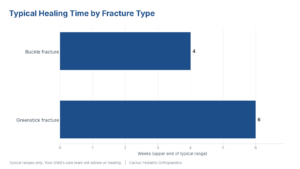
Many buckle fractures heal in about three to four weeks. Greenstick fractures often need about four to six weeks in a cast, sometimes longer. Follow-up visits may include an X-ray to make sure the bone is healing in good position. Children typically return to normal activity soon after, with sports timing guided by the care team.
When to Call the Doctor
- Pain that gets worse instead of better
- Swelling that makes the cast feel too tight
- Numbness, tingling, or blue or pale fingers
- A cast that is cracked, soaked, or rubbing the skin
- Fever or a bad smell coming from the cast
Caring for Your Child at Home
- Keep the splint or cast dry unless told it is waterproof.
- Elevate the arm and use ice over the splint for swelling in the first few days.
- Use pain relievers as directed by your child’s doctor.
- Watch for increasing pain, numbness, or color changes in the fingers, and call right away if they occur.
Frequently Asked Questions
How long does a buckle fracture take to heal in a child?
Many heal in about three to four weeks.
Can a child go to school with a buckle fracture?
Yes. Most children return to school quickly, with limits on recess and sports.
What is the difference between a buckle fracture and a greenstick fracture?
A buckle fracture compresses one side of the bone, while a greenstick fracture bends and cracks it.
Does a greenstick fracture need a cast?
Usually yes, and some need the bone straightened before casting.
Can you swim with a buckle fracture?
Only if the splint or cast is waterproof and the doctor approves.
Will my child need surgery for a greenstick fracture?
Surgery is rarely needed. Most greenstick fractures heal well with a cast, sometimes after gentle straightening.
Pediatric Fracture Care in Gilbert and Scottsdale
Cactus Pediatric Orthopaedics treats buckle, greenstick, and other childhood fractures at offices in Gilbert and Scottsdale. Call to schedule a visit if your child has a wrist or forearm injury. This article is educational and is not a substitute for medical advice.