
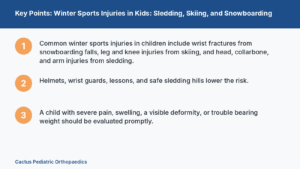
Common winter sports injuries in children include wrist fractures from snowboarding falls, leg and knee injuries from skiing, and head, collarbone, and arm injuries from sledding. Helmets, wrist guards, lessons, and safe sledding hills lower the risk. A child with severe pain, swelling, a visible deformity, or trouble bearing weight should be evaluated promptly.
Many Arizona families head north to Flagstaff and the White Mountains for snow trips each winter. For kids who rarely see snow, a weekend of sledding, skiing, or snowboarding is a highlight of the year. It also brings injuries that pediatric orthopedic specialists see every season.
Knowing which injuries are most common, and how to prevent them, helps keep a snow trip fun.
Common Sledding Injuries
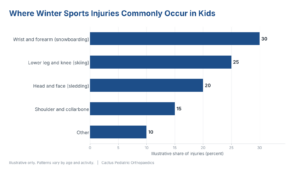
Sledding looks simple, but speed and obstacles make it one of the more common causes of winter injuries in children. Collisions with trees, fences, or other sledders can cause head injuries, collarbone fractures, and arm or leg fractures. Sledding headfirst increases the risk of head and neck injuries.
Common Skiing Injuries
Young skiers often injure the lower leg. Twisting falls can cause fractures of the tibia, the larger bone of the lower leg, and older children and teens can sprain or tear knee ligaments. Properly adjusted bindings that release during a fall help reduce these injuries.
Common Snowboarding Injuries
Snowboarders tend to fall onto outstretched hands, so wrist fractures and sprains are the most common snowboarding injuries in kids. Elbow and shoulder injuries also occur. Beginners fall more often, so lessons and wrist guards are especially helpful during the first few days on a board.
Prevention Tips for Families
- Wear a properly fitted helmet for skiing, snowboarding, and sledding.
- Use wrist guards for snowboarding, especially for beginners.
- Sign kids up for lessons rather than teaching them yourself on steep terrain.
- Have ski bindings set by a shop based on your child’s weight, height, and ability.
- Choose sledding hills with a clear runout and no trees, roads, or ponds at the bottom.
- Sled feet first, sit up, and ride one at a time.
- Take breaks, stay hydrated, and stop when kids are tired, since many injuries happen late in the day.
For more safety guidance, read our tips on bike riding safety and trampoline safety.
Dressing and Gear for Young Athletes
Rental gear should fit properly. Boots that are too large make it harder to control skis or a board, and helmets should sit level and snug without sliding. Layers help children stay warm and alert, and cold, tired muscles are more prone to injury. Goggles improve visibility on bright or snowy days, which helps kids see obstacles and other skiers.
First Aid on the Mountain
If your child is hurt, stop and assess before moving them. For a suspected arm or wrist injury, keep the limb still, support it with a jacket or makeshift sling, and apply ice wrapped in cloth. Most ski areas have a ski patrol trained in first aid who can help transport an injured child safely. Do not let a child keep skiing or snowboarding on a painful limb.
When to See a Pediatric Orthopedic Specialist
Some bumps and bruises can be watched at home, but certain signs need prompt evaluation:
- Severe pain or swelling
- A visible bend or deformity
- Inability to bear weight or use the arm
- Numbness, tingling, or a cold, pale hand or foot
- Pain over a growth plate near a joint
Children’s bones are still growing, and injuries near growth plates need careful assessment. A head injury with confusion, vomiting, or loss of consciousness needs emergency care.
Getting Back on the Slopes
Most children recover fully from common winter sports fractures. Returning to sports depends on the injury, healing, and strength. Your child’s orthopedic team can guide when it is safe to ski, snowboard, or sled again.
Frequently Asked Questions
What is the most common snowboarding injury in kids?
Wrist fractures and sprains from falling onto outstretched hands are the most common.
Should kids wear helmets for sledding?
Yes. Helmets reduce the risk of head injuries, which are among the most serious sledding injuries.
Do wrist guards help prevent snowboarding injuries?
Yes. Wrist guards can reduce wrist injuries, especially for beginners.
When should my child see a doctor after a fall on the slopes?
Seek care for severe pain, swelling, deformity, numbness, or trouble bearing weight.
Can a growth plate injury affect my child’s growth?
Some can, which is why injuries near joints in growing children should be evaluated by a specialist.
What age can kids start snowboarding?
Many programs start children around age six or seven, depending on coordination and interest.
Pediatric Orthopedic Care in Gilbert and Scottsdale
Cactus Pediatric Orthopedics cares for children and teens with fractures, sports injuries, and growth-related conditions at offices in Gilbert and Scottsdale. If your child was hurt on a winter trip, call to schedule an evaluation. This article is educational and is not a substitute for medical advice.