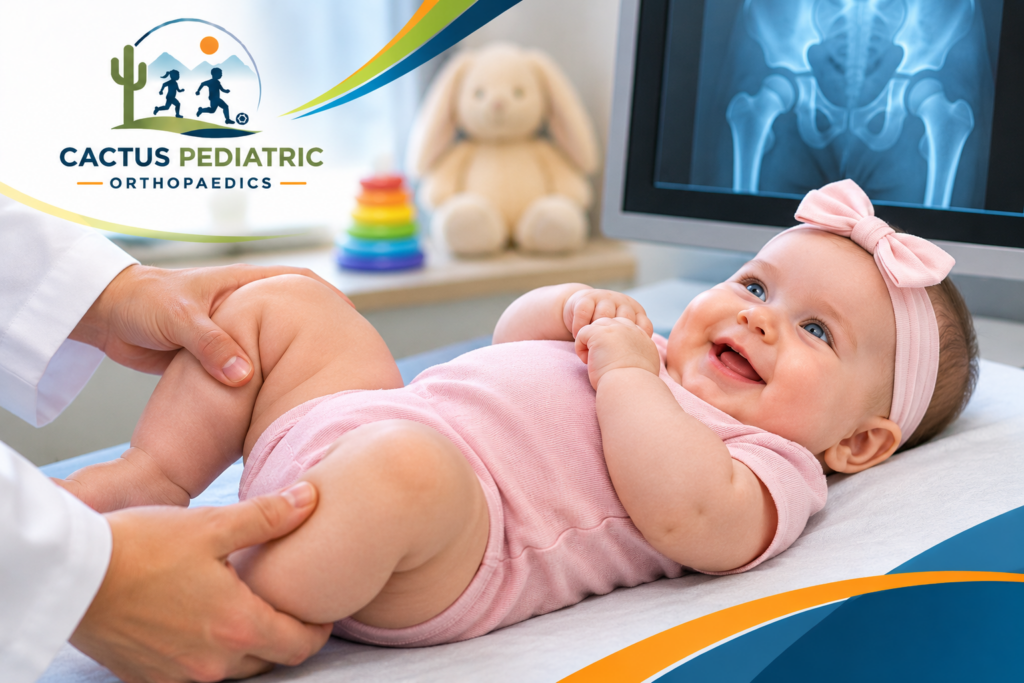

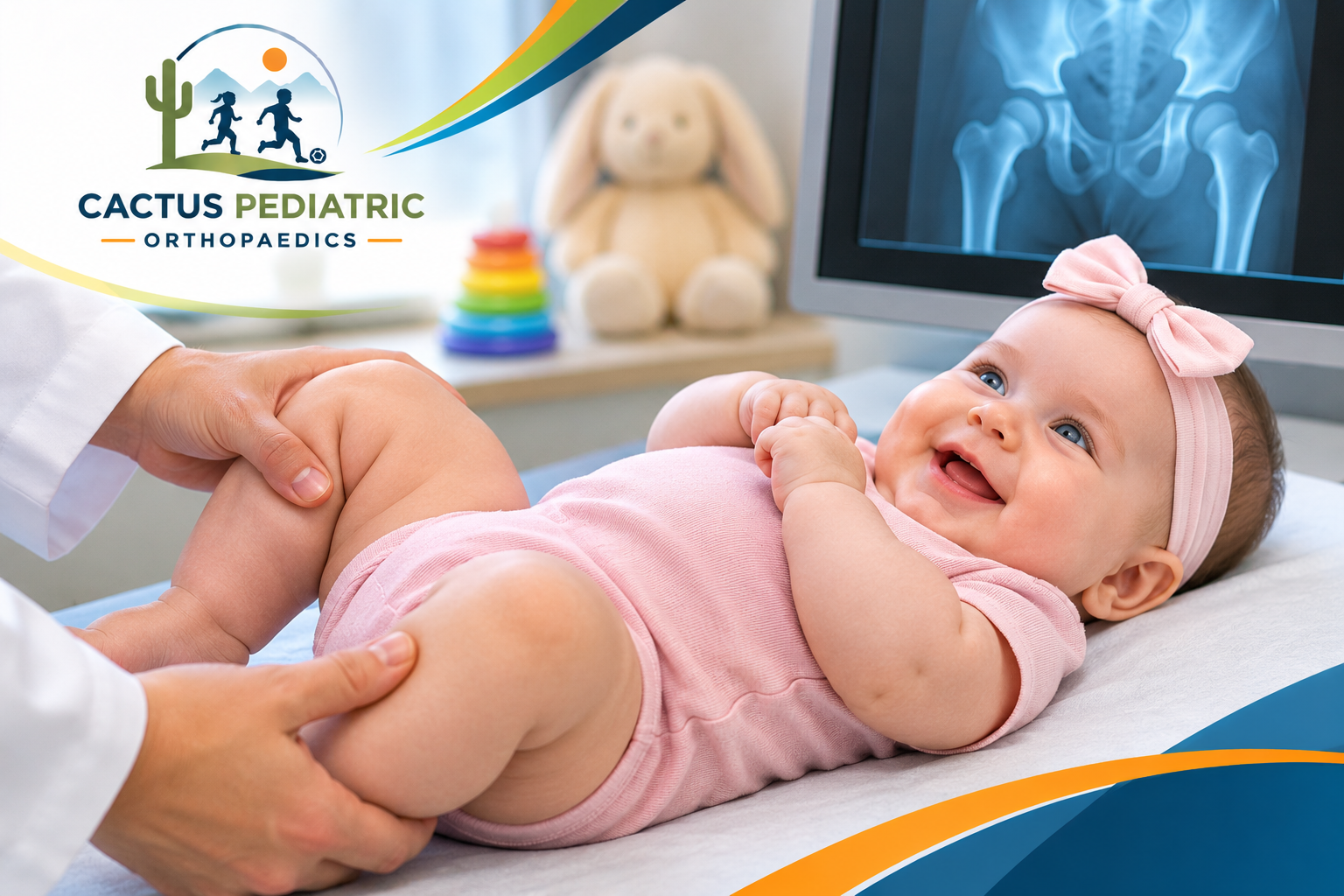
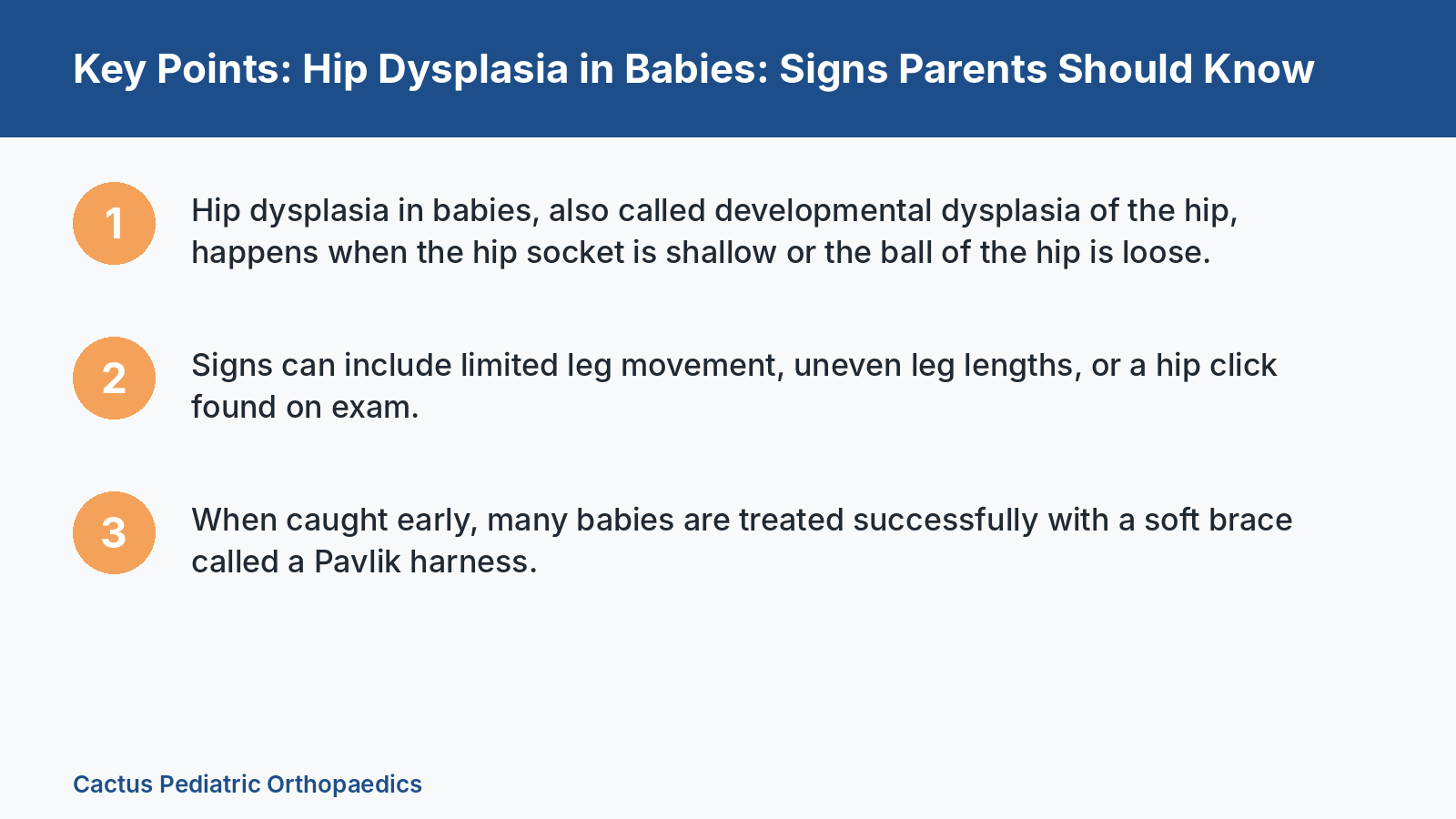
Hip dysplasia in babies, also called developmental dysplasia of the hip, happens when the hip socket is shallow, or the ball of the hip is loose. Signs can include limited leg movement, uneven leg lengths, or a hip click found on exam. When caught early, many babies respond well to treatment with a soft brace called a Pavlik harness.
Pediatricians check babies’ hips at birth and at well-child visits for a reason. Hip dysplasia is one of the most common orthopedic conditions in infants, and early diagnosis makes treatment simpler and more effective. Many parents in Gilbert, Scottsdale, and across the Valley first hear about it when a pediatrician notices something during an exam.
Here is what parents should know about hip dysplasia in babies.
What Hip Dysplasia Is
The hip is a ball-and-socket joint. In a baby with hip dysplasia, the socket may be too shallow, or the ball may be loose and able to slide partly or fully out of the socket. The condition ranges from mild looseness that resolves on its own to a fully dislocated hip that needs treatment.
Risk Factors
- Breech position during pregnancy, especially in the third trimester
- Family history of hip dysplasia
- Being a girl
- Being the firstborn
- Tight swaddling with the legs straight and pressed together
Many babies with hip dysplasia have no risk factors, which is why routine exams matter.
Signs Parents May Notice
- One leg appears shorter than the other
- Uneven skin folds on the thighs or buttocks, though this alone is not reliable
- Limited ability to spread one leg out to the side during diaper changes
- A clunk or click felt by a doctor during an exam
- In walking children, a limp, toe walking, or a waddling gait
Many cases cause no obvious signs and are found only on exam or imaging.
How It Is Diagnosed
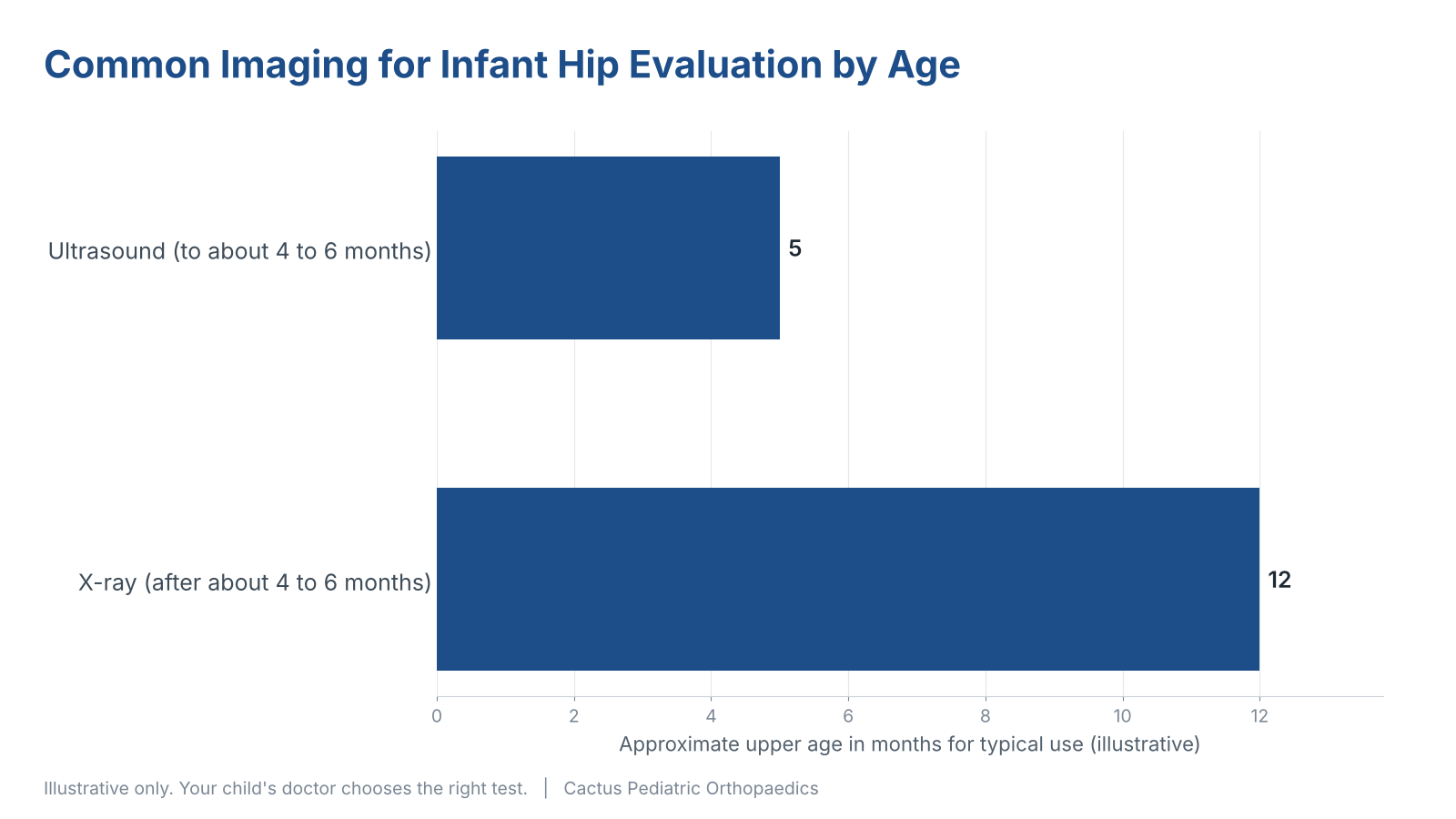
Doctors examine the hips using gentle maneuvers called the Ortolani and Barlow tests. If there is concern, doctors often use an ultrasound for babies younger than about four to six months, because their hip bones are still mostly cartilage. X-rays are more useful in older babies. A pediatric orthopedic specialist can confirm the diagnosis and recommend treatment.
Treatment in Young Babies
The Pavlik harness is the most common treatment for young babies. It is a soft brace that holds the hips in a flexed, spread position so the ball stays in the socket and the socket can develop normally. Babies often wear it for several weeks to a few months, with regular check-ups and ultrasounds to track progress.
Treatment in Older Babies and Toddlers
If the harness does not work or the condition is found later, treatment may include a closed reduction, where the doctor gently guides the hip into place under anesthesia, followed by a spica cast. Some children need surgery to reposition the hip or reshape the socket. Earlier diagnosis usually means less invasive treatment.
Hip-Healthy Swaddling
Swaddling is fine when done correctly. The legs should be able to bend up and out at the hips, rather than being wrapped straight and tight. Baby carriers that support the thighs with the knees spread are also considered hip-healthy.
Long-Term Outlook
Most babies treated early develop normal hips and grow up to walk, run, and play like other children. Untreated hip dysplasia can lead to pain, limping, and early arthritis later in life, which is why follow-up visits are important even after treatment ends.
When to See a Specialist
If your pediatrician notices a hip concern, your baby has risk factors such as breech positioning, or you notice signs like limited leg movement, a pediatric orthopedic evaluation can provide answers and a clear plan.
Frequently Asked Questions
What are the signs of hip dysplasia in babies?
Limited leg movement, uneven leg lengths, and a hip click on exam are common signs, though many babies have no obvious symptoms.
What causes hip dysplasia in infants?
Risk factors include breech position, family history, being a girl, being first born, and tight swaddling.
How is hip dysplasia treated in babies?
Young babies are often treated with a Pavlik harness. Older babies may need casting or surgery.
How long does a baby wear a Pavlik harness?
Often several weeks to a few months, depending on progress.
Can swaddling cause hip dysplasia?
Tight swaddling with straight legs can increase risk. Hip-healthy swaddling lets the legs bend and spread.
Will my baby walk normally after treatment?
Most babies treated early develop normal hips and walk normally.
Is a hip click always a sign of hip dysplasia?
No. Many hip clicks are harmless, but your doctor may check further if there is concern.
What is acetabular dysplasia?
It means the hip socket, called the acetabulum, is shallower than normal, so it does not fully cover the ball of the thigh bone. It is one form of developmental dysplasia of the hip.
Pediatric Hip Care in Gilbert and Scottsdale
Cactus Pediatric Orthopaedics evaluates and treats hip dysplasia in babies and children at offices in Gilbert and Scottsdale. Call (480) 551-0300 to schedule an evaluation if your pediatrician has a hip concern. This article is educational and is not a substitute for medical advice.